While the rest of Rhodes basks in the intense Aegean sun, there is a narrow canyon where time seems to slow down. Known as Petaloudes, the Valley of the Butterflies is more than just a tourist stop; it is a living, breathing ecosystem that smells of vanilla and cool earth. Walking through it feels like stepping behind a green curtain into a world where nature still holds all the secrets.
The Rare Sweetgum: Υγράμβαρη (Liquidambar orientalis)

The true "magic" of the valley begins with the trees. This is one of the few places in Europe where you will find the Υγράμβαρη (Oriental Sweetgum). These ancient, stately trees are the reason the valley exists as a sanctuary. They secrete a thick, aromatic resin—a balsamic gold that fills the air with a subtle, sweet perfume.
It is this specific scent that acts as a siren song for the moths. The resin provides a unique microclimate and the perfect chemical signal that tells the insects: "You are safe here." As you walk, run your hand near the bark (without touching!) to catch that distinct, resinous fragrance that has drawn life here for centuries.
The Species: The Jersey Tiger Moth
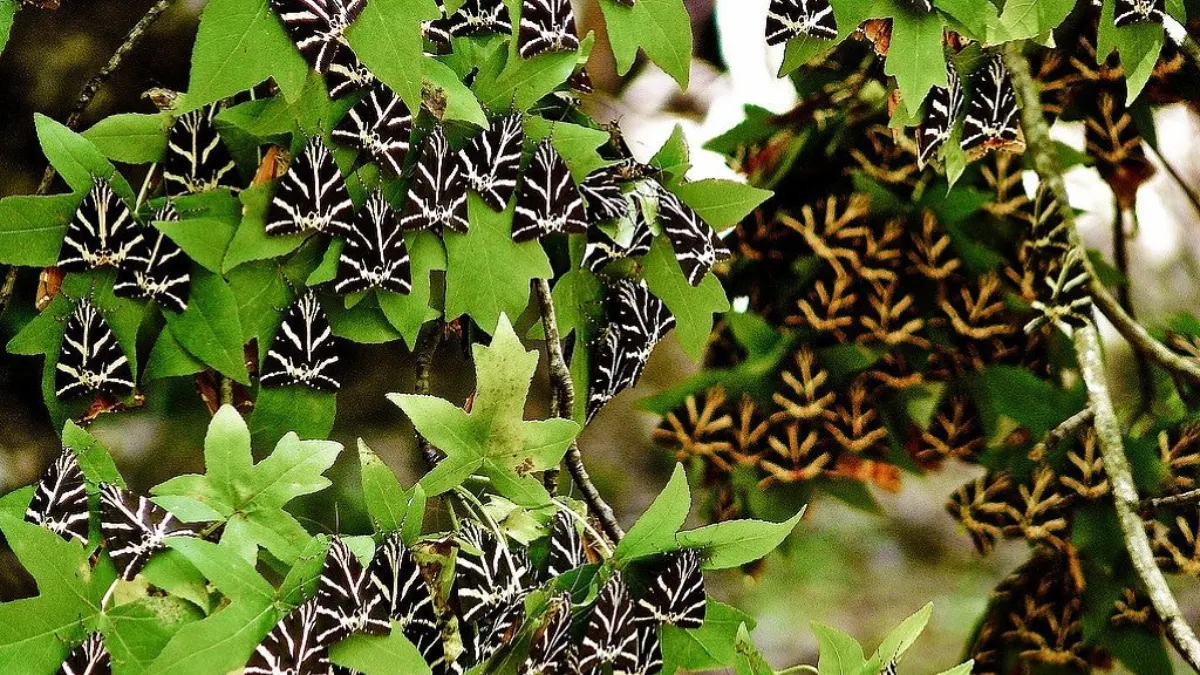
Don't let the name fool you. While everyone calls them butterflies, the residents of this valley are actually Panaxia Quadripunctaria (the Jersey Tiger Moth). These creatures are master of disguise. Resting on the rocks and the Υγράμβαρη trunks, their closed wings look like black and white geometric patterns, blending perfectly with the shadows.

However, when they take flight, the valley erupts in color. Their underwings are a vibrant, fiery orange-red. They spend their summers here in a state of "estivation"—a summer sleep—conserving every drop of energy for their long journey to mate and lay eggs in the autumn. This is why silence is the most respectful gift you can give them.
The Music of the Waters
The valley is carved by the Pelecanos River, a constant companion as you climb the wooden walkways. The sound of water is everywhere—from the gentle murmur of the stream to the sudden rush of small, crystalline waterfalls. These waters keep the humidity high and the temperature nearly 10 degrees cooler than the coast. The moss-covered stones and the small ponds filled with freshwater crabs create a lush, humid oasis that feels more like a tropical rainforest than a Greek island.

The Peak: Monastery of Kalopetra
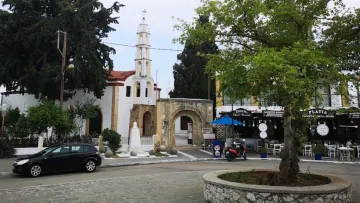
If you follow the path to its highest point, the forest opens up to reveal the Monastery of Kalopetra. Built in 1784 by Alexandros Ypsilantis, this humble white-washed monastery sits like a guardian over the valley.

The courtyard offers a moment of spiritual quiet and a panoramic view that stretches across the island all the way to the Turkish coast. It is the perfect place to sit under the shade of the trees, reflect on the hike, and perhaps try some local honey sold by vendors nearby before making your descent back through the amber mist of the moths.

Frequently Asked Questions
What is the best month to see the moths?
To see the valley blanketed in moths, you must visit between late June and early September. In May or late October, the valley is beautiful for hiking, but the moths will not be present.
Is there an entrance fee?
Yes, there is a small fee to help maintain the wooden paths and protect the environment. In the high season, it is approximately €5, while in the shoulder season, it drops to around €3.
Can I take photos?
Yes, but flash photography is strictly forbidden as it startles the moths. Also, remember that clapping or making loud noises to make them fly for a photo is harmful to their survival.