
The Palace of the Grand Master of the Knights of Rhodes rises above the Medieval City as one of the island’s most commanding and historically significant monuments. Built by the Knights of St. John in the 14th century and later reconstructed during the Italian period, the palace reflects centuries of political power, military strategy, and architectural ambition. Today, it stands as a central landmark of Rhodes, offering visitors a compelling journey through the island’s medieval and early modern past.
Introduction
Dominating the highest point of Rhodes’ Medieval City, the Palace of the Grand Master of the Knights of Rhodes stands as one of the most imposing and historically layered monuments in Greece. Located in the northwestern part of the fortified Old Town, the palace is not only the most significant remnant of the Knights’ rule but also a defining landmark of Rhodes itself. Known locally as the “Kastello,” this monumental structure reflects centuries of transformation, from Byzantine stronghold to medieval administrative center, from Ottoman neglect to Italian reconstruction, and finally to a modern museum welcoming visitors from around the world.
Historical Background
The Palace of the Grand Master was originally constructed in the early 14th century, shortly after the Knights of the Order of St. John of Jerusalem took control of Rhodes in 1309. It was built on the site of an earlier Byzantine acropolis, which had existed at least since the 7th century AD. In antiquity, this area formed part of the lower acropolis of ancient Rhodes.
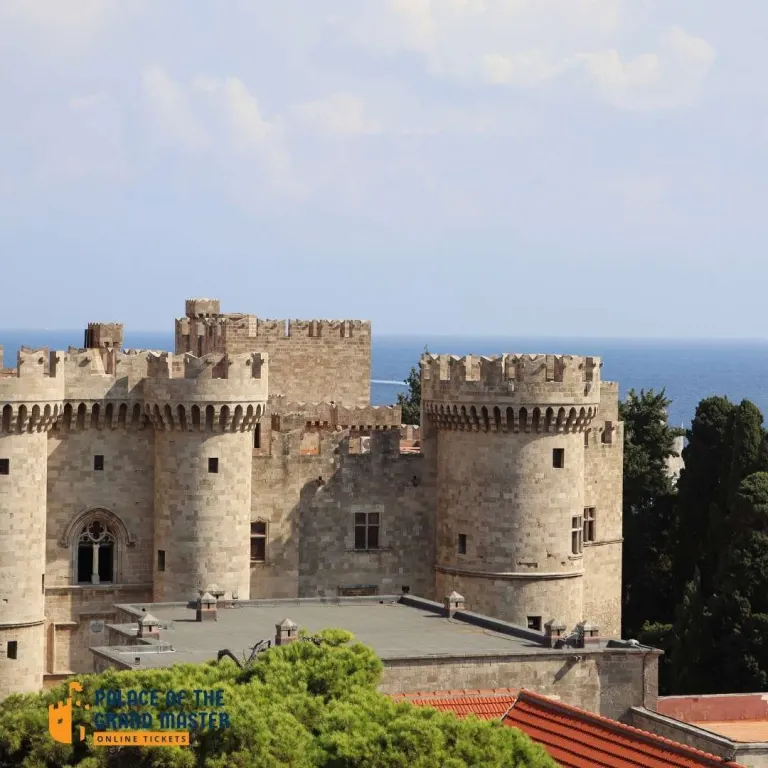
For more than two centuries, until the Ottoman conquest in 1522, the palace served as the administrative center of the Knights and the official residence of the Grand Master. Following the Ottoman takeover, the building—already damaged during the siege—was used as a barracks and later as a prison. Over time, it fell into severe disrepair. In 1856, a major explosion, caused by ignited gunpowder stored in the nearby Church of St. John, further devastated what remained of the structure.
When Rhodes passed to Italian control in 1912, the new administration undertook an ambitious reconstruction program. Between 1937 and 1940, under the supervision of Italian Governor Cesare Maria De Vecchi, the palace was rebuilt almost entirely. Although the Italians aimed to respect the medieval character, much of what stands today reflects 20th-century reconstruction rather than an untouched medieval original.
Architecture & Design
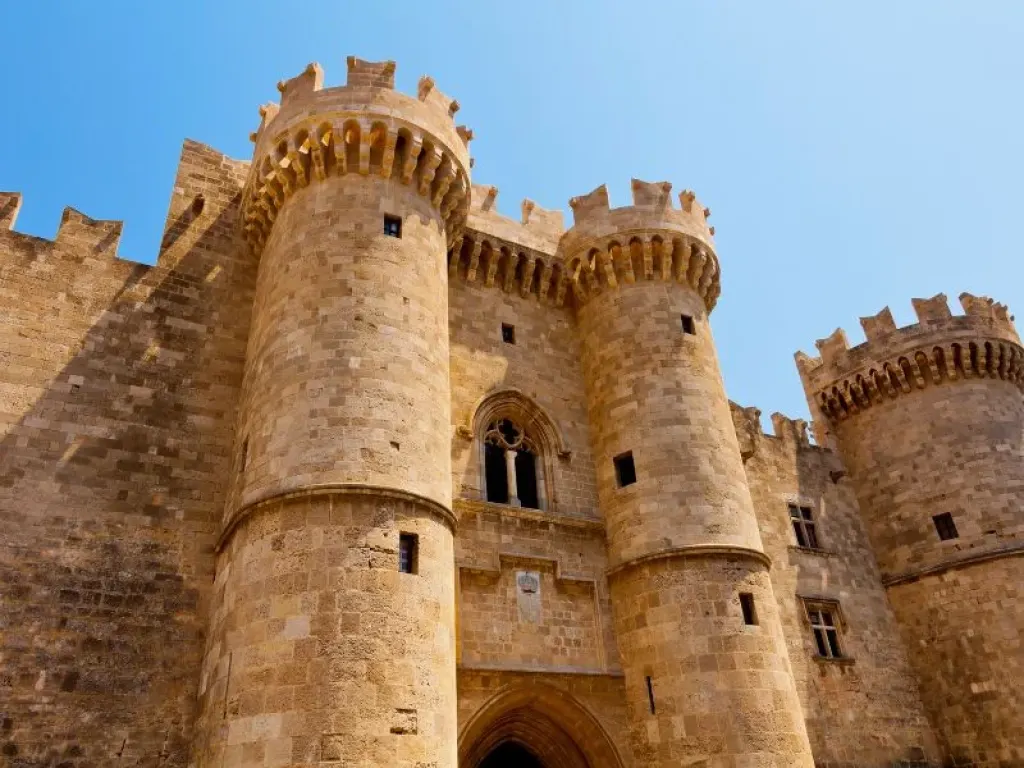
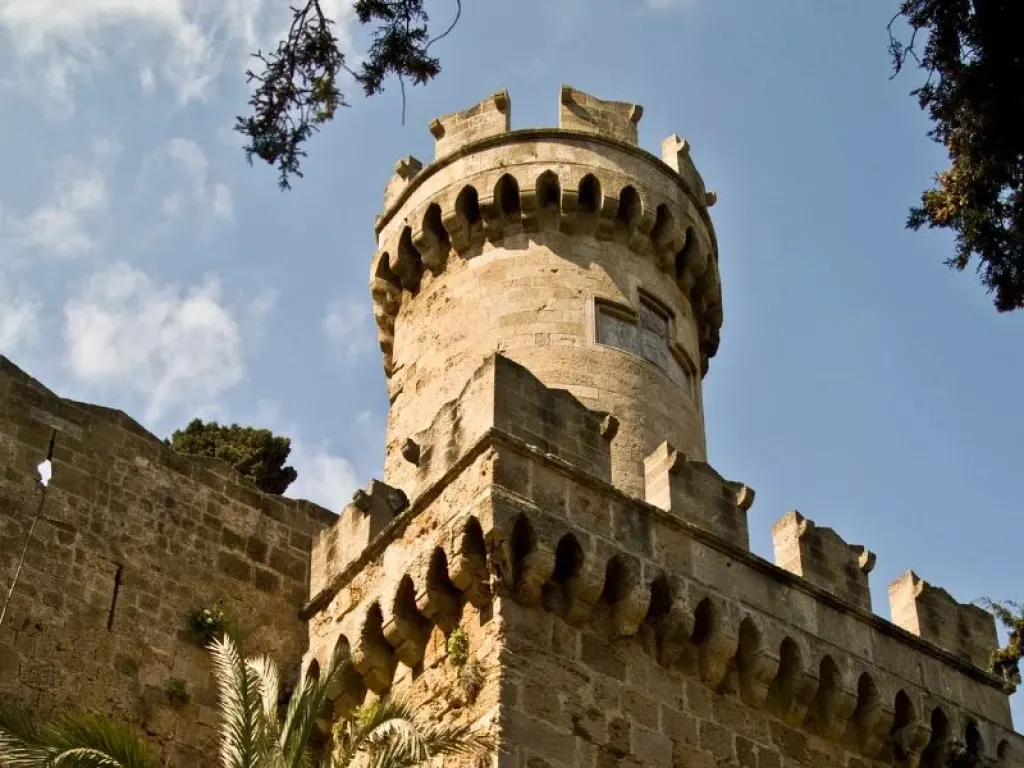
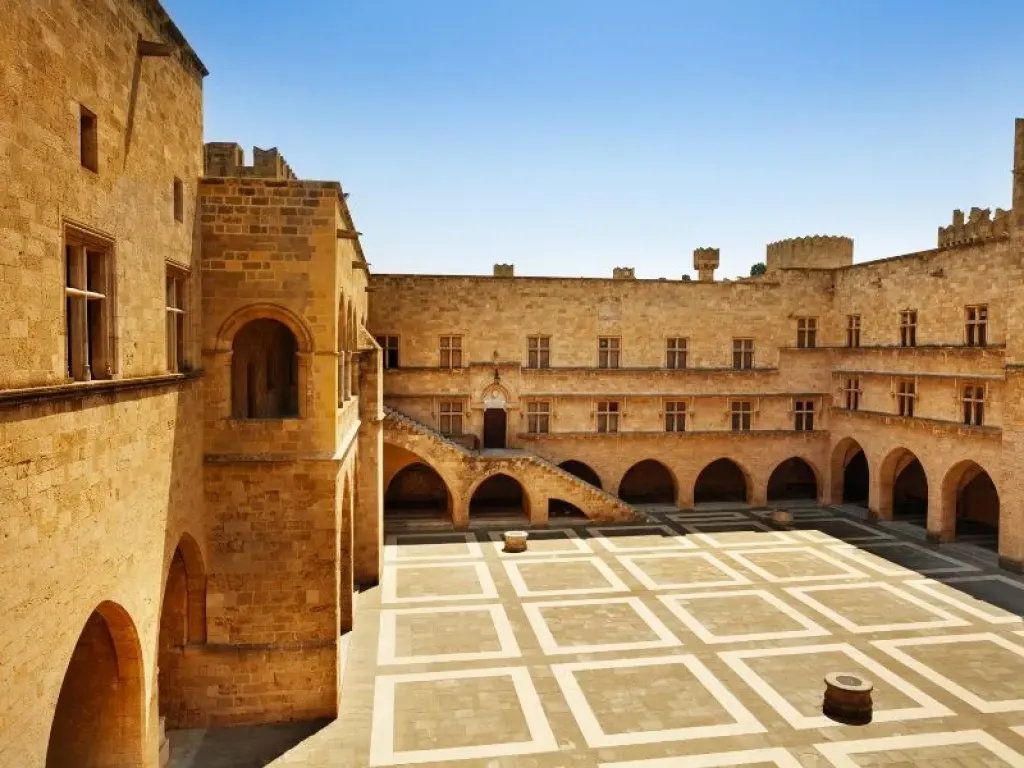
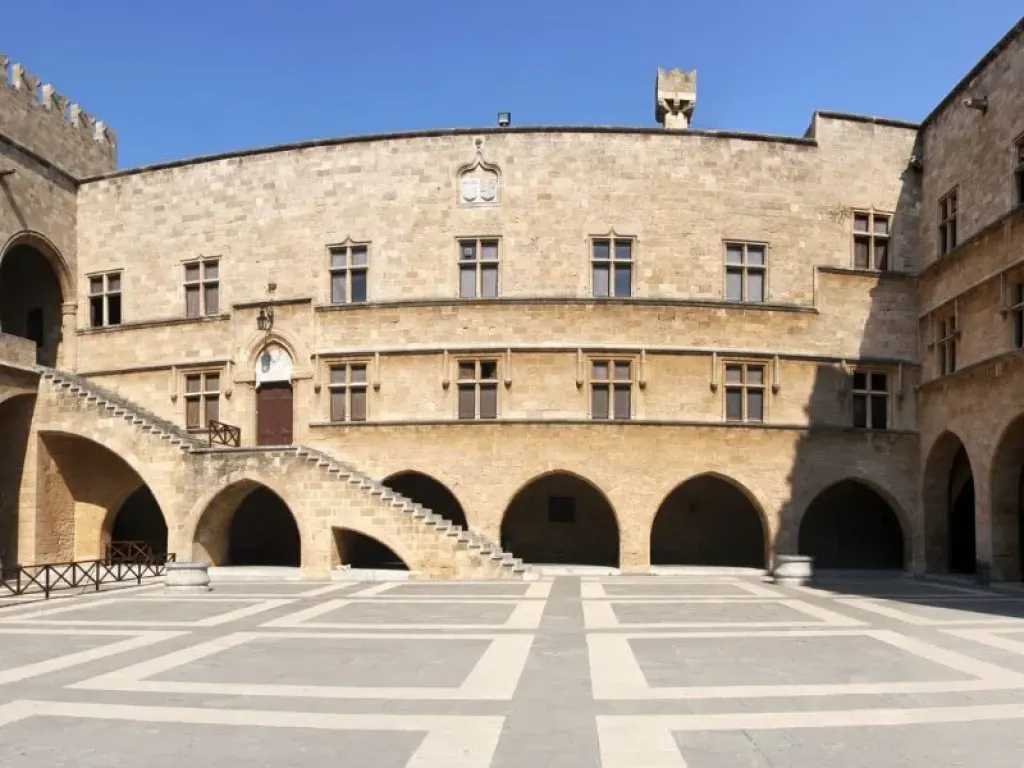
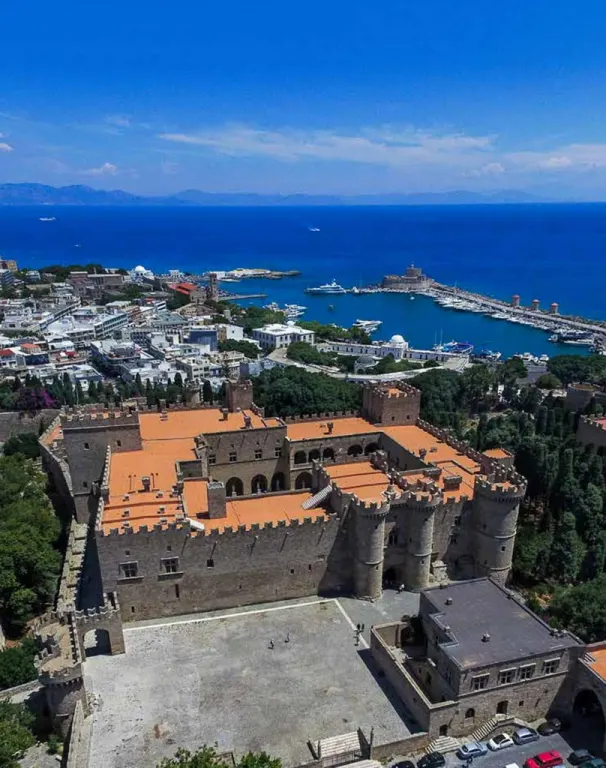
The palace is a rectangular structure measuring approximately 80 by 75 meters, organized around a large central courtyard of about 50 by 40 meters. The main entrance is located on the southern side and is flanked by two imposing medieval-style towers with battlements, creating an unmistakably fortified façade.
Inside, the spacious courtyard is decorated with statues from the Hellenistic and Roman periods. During the era of the Knights, the ground floor housed auxiliary functions such as kitchens, storage rooms, and stables. The upper floor contained the private apartments of the Grand Master, ceremonial halls, the Council Chamber, banquet rooms, and administrative offices.
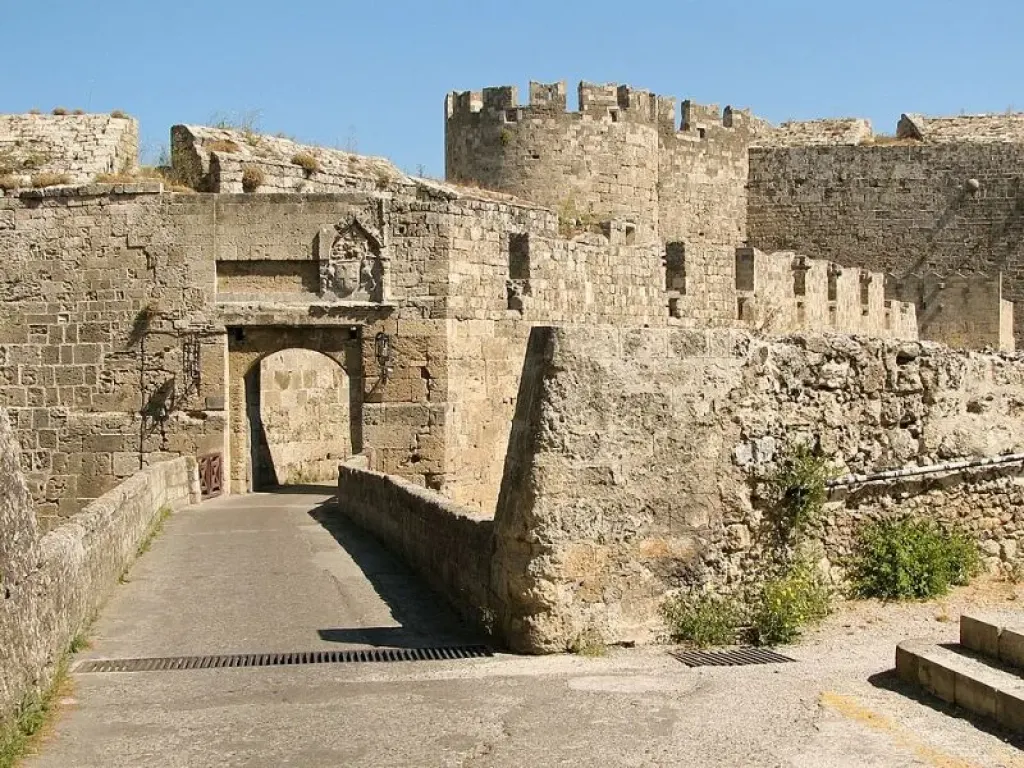
Adjacent to the palace on its northwestern side stands the powerful Bastion of the Palace of the Grand Master, a solid artillery platform rising approximately 15 meters above the moat. Its cannons once protected not only the palace but also the northern and northwestern sections of the city and the Mandraki harbor. Until the late 15th century, it was the strongest defensive point of medieval Rhodes.
Notably, some of the cylindrical gate towers associated with the palace and nearby entrances were already considered outdated in fortification design at the time of their construction. While visually impressive and evocative of Western medieval architecture, they played only a limited defensive role during the major sieges of 1480 and 1522.
The Knights of St. John and Their Legacy
The Knights of St. John, also known as the Hospitallers, transformed Rhodes into one of the most formidable fortified cities in the Mediterranean. From 1309 to 1522, they developed an advanced defensive system and established a highly organized administrative state.
The Palace of the Grand Master symbolized both political authority and spiritual leadership. It was the seat of governance and the residence of the Order’s highest official. The structure represented not only military power but also diplomatic and administrative organization within the broader Christian world of the late medieval period.
The Knights’ legacy remains embedded in the layout of the Medieval City, and the palace is the clearest architectural expression of their presence on the island.
10 Historical images of Rhodes - Then and Now (Interactive)
The Palace During the Italian Occupation
The Italian reconstruction between 1937 and 1940 dramatically reshaped the palace’s present appearance. Because the building had been largely reduced to ruins, the restoration relied heavily on available interior plans and historical interpretation. The result was a striking and monumental structure, though not an entirely authentic medieval reconstruction.
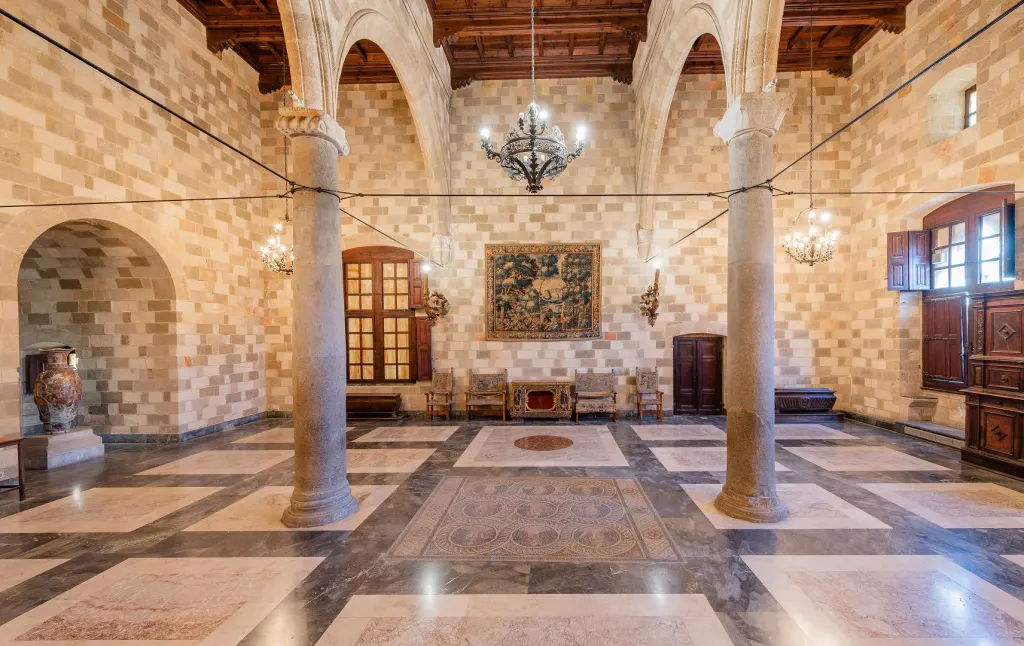
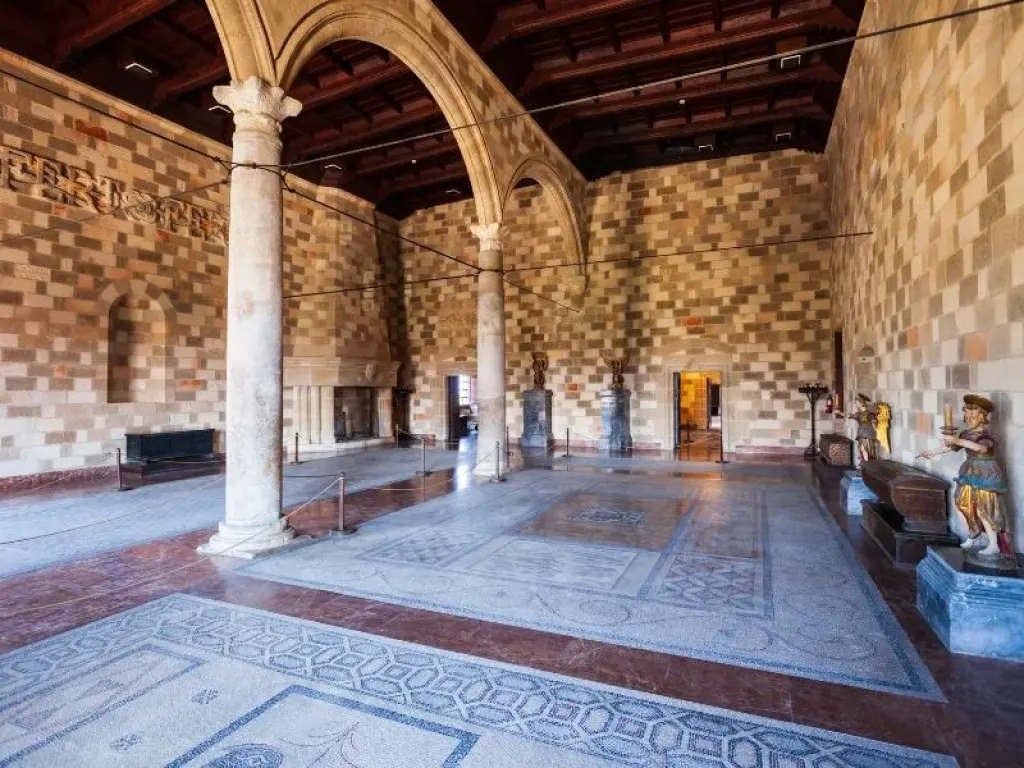
During this period, the palace functioned as the administrative headquarters of the Italian authorities and as the residence of the governor. The interiors were decorated with carefully selected medieval-style furnishings, antique pieces, mirrors, paintings, candelabra, and architectural elements. The Italians also transferred significant mosaic floors—primarily from secular and ecclesiastical buildings in Kos—installing them throughout the palace halls. These mosaics, dating mainly to the late Hellenistic period, remain among the most impressive features of the monument today.
After the Dodecanese were incorporated into Greece in 1948, the palace’s upper floor was converted into a museum, and the monument evolved into one of Rhodes’ principal cultural attractions.
What Visitors Can See Today
Today, the Palace of the Grand Master hosts permanent exhibitions focusing on the ancient and medieval city of Rhodes. On the ground floor, a major exhibition titled “Rhodes from the Early Christian Period until the Ottoman Conquest (1522)” presents archaeological finds from excavations in the Medieval City.
The exhibition, established in 1993, is organized thematically into sections including Economy, Daily Life, Defense and Administration, Spiritual Life, Worship and Art, and Architecture. Displays include sculptures such as capitals and sarcophagi, ceramics, glass objects, portable icons, detached wall paintings, coins, and lead seals. Introductory texts and visual panels help contextualize the historical development of the city from the 4th century AD to the beginning of Ottoman rule.
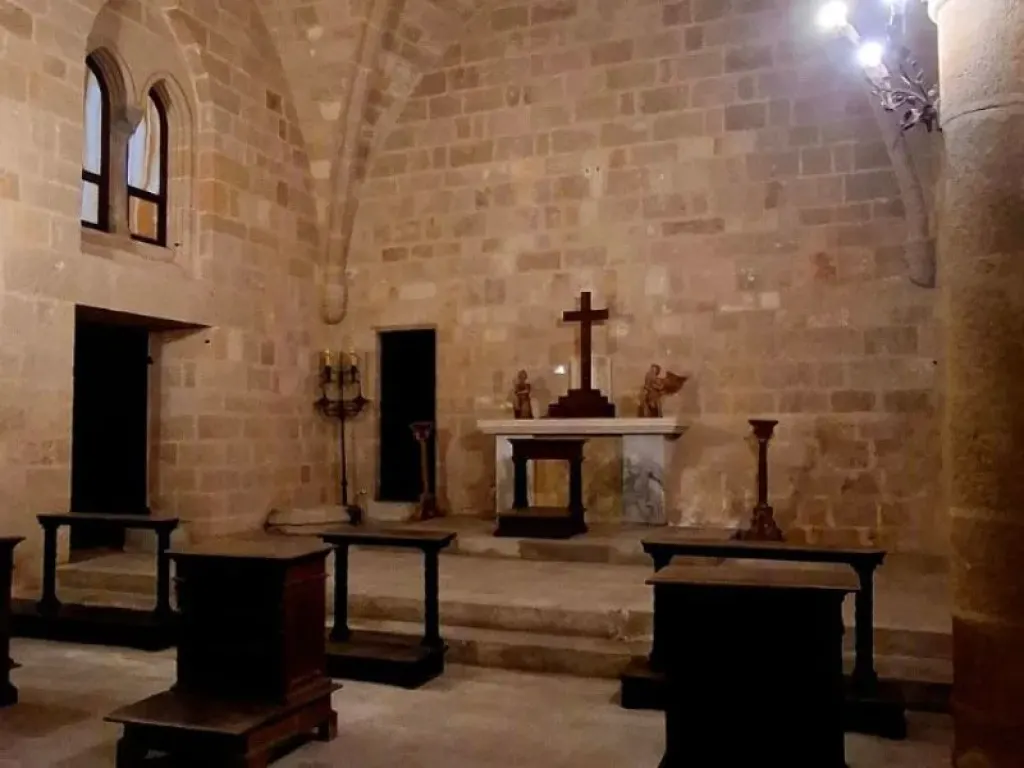
On the upper floor, visitors encounter the reconstructed ceremonial halls and rooms adorned with Hellenistic mosaics and period furnishings installed during the Italian era. The experience emphasizes scale, symmetry, and architectural atmosphere, offering a self-paced visit through stone corridors, fortified features, and expansive chambers.
Visit duration varies. A brief walkthrough may take 45 minutes, while a standard visit typically lasts 60 to 90 minutes. Those who explore the exhibitions in detail may spend up to two hours inside.
The Rooms of the Palace of the Grand Master of Rhodes
Here is a comprehensive list of the rooms within the Palace of the Grand Master of Rhodes, each with a brief description to guide visitors through its historical and artistic treasures:
Entrance Hall
A grand space embodying the Gothic architectural prowess of the Knights Hospitaller. Thick stone walls, towering arches, and remnants of banners and coats of arms highlight the knights’ dual identity as warriors and spiritual caretakers.
Central Courtyard
The heart of the palace, this open-air space is framed by graceful Gothic arches and mosaics from ancient Kos. It served as a gathering and ceremonial area for knights and dignitaries alike.
Grand Staircase
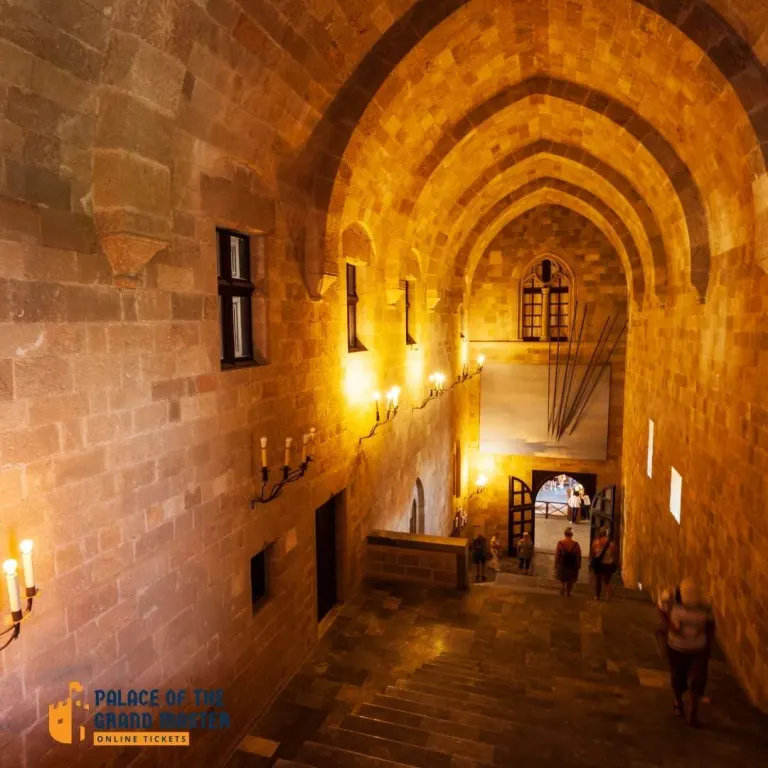
An imposing ascent leading to the upper chambers of the palace. Its broad steps and Gothic design symbolize the gravity and authority of the decisions made in the rooms above.
Trophy Room
A showcase of Hellenistic and early Christian artifacts, including the “Fish Mosaic” and the “Mosaic with Split Circles,” blending Rhodes’ ancient heritage with the medieval history of the Order.
Laocoön Room
Home to a replica of the famous Hellenistic sculpture Laocoön and His Sons, alongside intricate mosaics and decorative Renaissance furniture.
Medusa Room
Features a striking mosaic of Medusa, framed by geometric patterns, and adorned with displays of Islamic and Chinese vases, highlighting the cultural crossroads of Rhodes.
Tiger Room
Centered on a mosaic of a tiger, symbolizing strength and ferocity, this room reflects the Italian restoration’s focus on classical motifs.
The Cross Vaults Hall
Once the office of Cesare Maria De Vecchi, the Italian governor of Rhodes. The room’s Gothic vaults and Renaissance furniture emphasize the grandeur of Italian restoration efforts.
Colonnade Room
A grand reception hall characterized by its stately columns and intricate mosaics, serving as a ceremonial and diplomatic space for the knights.
Thyrsus Room
This room’s centerpiece is a mosaic of a thyrsus, a classical symbol of vitality and festivity, complemented by Renaissance furnishings and Murano glass accents.
Seahorse and Nymph Room
Features a dynamic mosaic of a nymph riding a seahorse, surrounded by geometric designs, showcasing the interplay between myth and marine life.
Italian Corridor
Decorated with 17th-century Italian furniture, this sequence of rooms illustrates the Italian influence during the early 20th century.
Lantern Room
Named after its distinctive wall-mounted lantern, this room boasts early Christian mosaics and Baroque furniture, blending ancient and modern aesthetics.
Dolphin Room
A captivating mosaic of dolphins in rhythmic patterns highlights this space, blending classical marine themes with Baroque furnishings.
Gladiator and Tiger Room
Dominated by a dramatic mosaic depicting a gladiator battling a tiger, the room also features choir stalls and a medieval wooden chest.
Corridor of Poseidon and Polyvotis
An extraordinary mosaic corridor illustrating Poseidon’s battle with the giant Polyvotis, alongside mythological and gladiatorial scenes.
Cupid Fisher Room
A whimsical mosaic of Cupid fishing, surrounded by dolphins, symbolizing harmony and joy, adds a playful touch to the palace.
Nine Muses Room
Dedicated to the arts and sciences, this room features mosaics of the Nine Muses and Renaissance furnishings, celebrating creativity and learning.
Stall Rooms
Lined with intricately carved wooden stalls and vibrant mosaics, these rooms served as meeting spaces for the knights.
Why It Is One of Rhodes’ Most Important Landmarks
The Palace of the Grand Master is not merely a monument; it is the architectural and symbolic heart of medieval Rhodes. It embodies successive layers of history—Byzantine, Hospitaller, Ottoman, Italian, and modern Greek—within a single monumental complex.
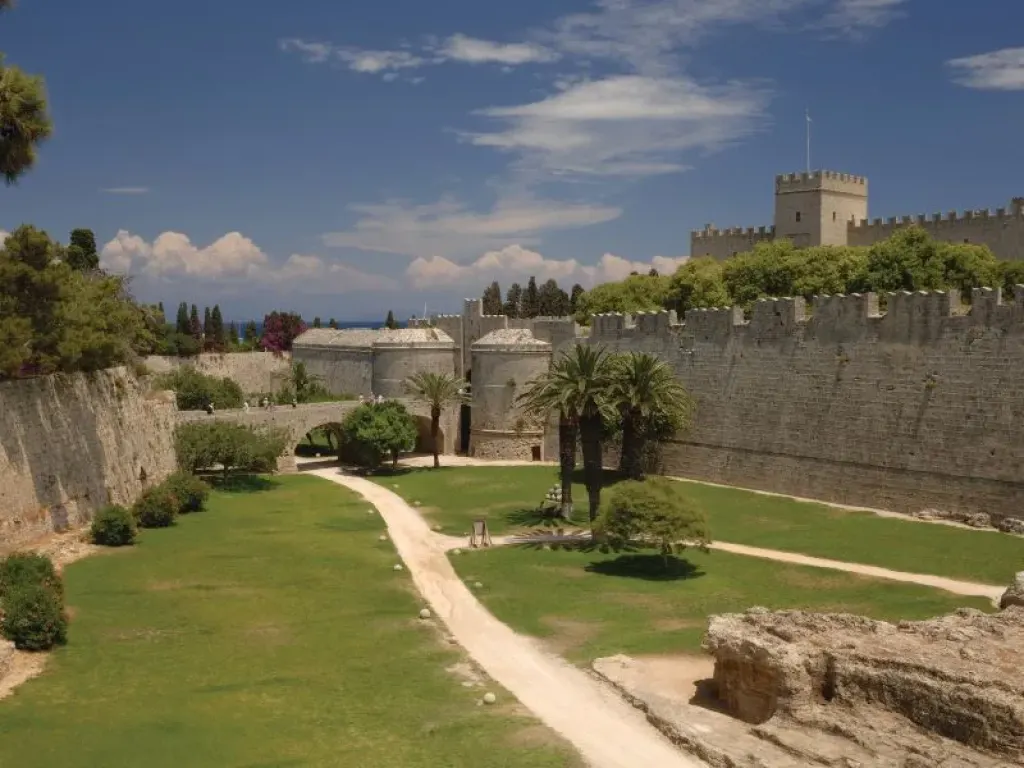
Its strategic position, monumental scale, reconstructed grandeur, and curated exhibitions make it one of the island’s most significant cultural sites. As both fortress and palace, it encapsulates the defensive and administrative sophistication that once made Rhodes one of the most important strongholds in the Eastern Mediterranean.
Download the Guide for the Palace of the Grand Master of the Knights of Rhodes ( PDF )
Frequently Asked Questions
When was the Palace of the Grand Master originally built?
The original construction began in the early 14th century, shortly after the Knights of St. John established their rule over Rhodes in 1309.
Is the palace an authentic medieval building?
While parts of the structure date to the medieval period, the palace was extensively reconstructed by the Italians between 1937 and 1940. Therefore, much of its present appearance reflects 20th-century restoration.
What can visitors see inside the palace?
Visitors can explore permanent exhibitions on the ancient and medieval city of Rhodes, view archaeological artifacts, walk through large ceremonial halls, and admire Hellenistic mosaic floors transferred from Kos.
How long does it take to visit the palace?
Most visitors spend between one and one and a half hours inside. A shorter visit may take around 45 minutes, while a detailed exploration can last up to two hours.
Where is the palace located?
The palace is situated in the northwestern part of the Medieval City of Rhodes, at the highest point within the fortified Old Town.